💳 Paying in Korea: Cards, Cash & Tax Refunds
Cards, cash, or Apple Pay in Korea? Where each works, best exchange rates, ATM fees, tax refund steps, and no-tipping rule. 2026 guide.
⚡ Key Takeaways
- 💳 Cards accepted almost everywhere — Visa/Mastercard preferred
- 💵 Carry ₩50,000–100,000 cash for markets & street food
- 🏪 ATMs at every convenience store (CU, GS25, 7-Eleven) — 24/7
- 🧾 Tax refund on purchases ₩15,000+ — instant refund at checkout
- 🚫 No tipping — it's not expected anywhere in Korea
Card vs Cash: The Reality
Korea is one of the most cashless societies in the world — over 95% of consumer transactions are non-cash. Visa and Mastercard are accepted at virtually all chain stores, restaurants, cafes, convenience stores, and even most taxis.
However, "cashless" doesn't mean "100% card". There are real situations where you'll need cash:
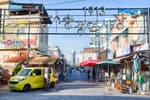
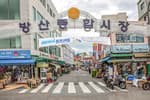
- Traditional markets — Vendors at Gwangjang Market, Namdaemun, Dongdaemun, and local markets are often cash-only
- Street food stalls — Hotteok, tteokbokki, and odeng carts almost never take cards
- Small family restaurants — Especially outside Seoul, older restaurants may only accept cash or Korean bank cards
- Coin-operated machines — Laundromats, some lockers at subway stations, and arcade games
- Temple admission fees — Some smaller temples only take cash at the gate
Recommendation: Carry ₩50,000–₩100,000 in cash (roughly $35–$70 USD) as backup. You'll use your card 90% of the time, but when you need cash, you really need it.
AMEX note: American Express acceptance is limited. Major department stores (Lotte, Shinsegae, Hyundai) and international hotels accept AMEX, but most restaurants, cafes, and smaller shops do not. Stick with Visa or Mastercard.
💡Keep some ₩10,000 and ₩5,000 bills handy — small vendors often can't break a ₩50,000 note.
Where Cash Is King
These are the places where cash is essential or strongly preferred. Plan ahead if any are on your itinerary.
Traditional markets:
- Gwangjang Market (광장시장) — Seoul's most famous food market. The bindaetteok (mung bean pancake, ₩5,000) and mayak gimbap stalls are cash-only. Some larger shops inside accept cards.
- Namdaemun Market (남대문시장) — Korea's oldest and largest market. Street-level food vendors are cash-only. Indoor shops increasingly accept cards.
- Dongdaemun Market (동대문시장) — Wholesale fashion and fabric. Many stalls are cash-only, especially for bargaining.
- Tongin Market (통인시장) — The famous "lunchbox" market where you buy yeopjeon coins (₩10,000 for 10 coins) to exchange for food at stalls. Cash only for the coins.
Regional markets like Jagalchi (Busan), Seomun (Daegu), Jungang (Gangneung), and Mokpo's fish market are mostly cash-preferred for food stalls.
Street food everywhere: Hotteok, tornado potato, dakkochi, bungeoppang — these roadside carts are almost universally cash-only. Prices are small (₩1,000–₩5,000) so keep ₩1,000 and ₩5,000 bills handy.
Other cash situations:
- Taxi drivers occasionally claim their card terminal is broken (it's rare, but carry some cash just in case)
- Small countryside restaurants and cafes
- Some temple entrance fees and parking lots at national parks
](/_next/image?url=https%3A%2F%2Ftong.visitkorea.or.kr%2Fcms%2Fresource%2F30%2F4023830_image3_1.jpg&w=3840&q=75)
Currency Exchange
The Korean currency is the Won (₩). As of 2026, the exchange rate is approximately ₩1,400 = $1 USD. Bills come in ₩1,000, ₩5,000, ₩10,000, and ₩50,000. Coins are ₩10, ₩50, ₩100, and ₩500.
Best exchange rates (ranked):
- Money changers in Myeongdong — The best rates in Korea. Look for small exchange booths on the main street and side alleys. No commission. Popular ones include "Korea Exchange" and "Big Money Exchange" on Myeongdong's main road.
- Hongdae money changers — Nearly as good as Myeongdong. Convenient if you're staying in the Hongdae/Mapo area.
- Banks — Standard rates with a small spread. Hana Bank, Shinhan Bank, and Woori Bank have foreign exchange counters at major branches. Bring your passport. Hours: 9 AM – 4 PM weekdays only.
- Incheon Airport exchange — Convenient but 3–5% worse than Myeongdong. Exchange only enough for your first day (₩50,000–₩100,000) at the airport, then get better rates in the city.
Tips:
- USD, EUR, JPY, and CNY get the best rates. Other currencies may have wider spreads.
- Avoid exchanging at hotels — their rates are the worst (5–10% markup).
- Keep your exchange receipts if you want to convert remaining Won back to your currency before departing.
- ₩50,000 bills are the most useful — equivalent to roughly $35. Smaller vendors may not have change for ₩50,000 on small purchases, so keep some ₩10,000 and ₩5,000 bills.
💡Exchange only ₩50,000–100,000 at the airport for your first day. You'll get much better rates at money changers in Myeongdong or Hongdae.
ATM Guide
If you prefer withdrawing Won directly from your home bank account, Korea has widely available Global ATMs that accept foreign Visa, Mastercard, Maestro, and Cirrus/Plus network cards.
Where to find Global ATMs:
- Convenience stores — CU, GS25, and 7-Eleven all have ATMs that accept foreign cards. Look for the "Global ATM" or "해외카드" sign on the machine. Available 24/7.
- Subway stations — Most major stations have bank ATMs, but not all accept foreign cards. Stick to convenience store ATMs for reliability.
- Banks — Hana Bank, Shinhan Bank, and KB Kookmin Bank ATMs accept foreign cards. Available during bank hours (9 AM – 4 PM weekdays), though lobby ATMs may work after hours.
- Incheon Airport — Multiple ATMs at arrivals, all accepting foreign cards.
Fees:
- Korean ATM operator fee: ₩3,000–₩4,000 per withdrawal
- Your home bank may charge an additional international ATM fee (check before you travel)
- Withdrawal limits: typically ₩300,000–₩1,000,000 per transaction depending on the ATM and your card limit
Cost-saving tip: Use a travel-friendly debit card (like Charles Schwab, Wise, or Revolut) that reimburses ATM fees and charges no foreign transaction fees. Withdraw larger amounts less frequently to minimize per-transaction fees.
Apple Pay & Mobile Payments
Apple Pay launched in Korea in 2023. It works at stores with NFC contactless terminals — and foreign Visa/Mastercard cards in your Apple Wallet work too, not just Korean-issued cards.
Where Apple Pay works (foreign cards included):
- Convenience stores — CU, GS25, 7-Eleven (most locations have NFC readers)
- Major chains — Starbucks, Olive Young, E-Mart, Homeplus, large restaurant chains
- Department stores — Lotte, Shinsegae, Hyundai
Where it often doesn't work:
- Small independent restaurants — Many use older card terminals without NFC readers
- Traditional markets & street food — Cash only at most stalls
- Some taxis — Terminal compatibility varies
Practical advice for tourists: Apple Pay works at more places than you might expect, especially chain stores and convenience stores. But don't rely on it as your only payment method — many smaller shops still have terminals that only accept chip-insert or swipe. Always carry a physical Visa or Mastercard as your primary card.
Samsung Pay: Has wider acceptance than Apple Pay in Korea because it supports both NFC and MST (magnetic stripe transmission), meaning it works even on older swipe-only terminals. However, it requires a Samsung phone with a Korean Samsung account — impractical for most tourists.
Google Pay: Very limited support in Korea. Not recommended.
Bottom line for tourists:
- Physical Visa/Mastercard (chip) — works everywhere cards are accepted
- Apple Pay — useful backup at major stores and convenience stores
- T-money card — for all public transit
- Cash — for markets and street food
Tax Refund for Tourists
Foreign visitors can get a VAT refund of up to 10% on purchases made at stores displaying the "Tax Free" (택스 프리) sign. This applies to goods you're taking out of Korea — not services, food, or accommodation.
Eligibility:
- You must be a non-resident foreigner staying less than 6 months
- Single purchase of ₩15,000 or more (including tax) at a participating store
- Maximum refundable amount per purchase: ₩500,000 per store visit
- Goods must leave Korea with you (not shipped separately)
Two methods — choose at the store:
- Instant refund (즉시 환급) — Get the refund right at the store. Show your passport at checkout. The cashier deducts the VAT on the spot. Easiest option. Available at most major Tax Free stores. Limited to ₩500,000 cumulative per trip for instant refunds.
- Airport refund (공항 환급) — Pay full price at the store and get a Tax Free receipt. At the airport before departure, visit the Tax Refund counter (after check-in, before security) to get your refund in cash or credited to your card. Three operators: KT Tourist Reward, Global Tax Free, and Easy Tax Refund — check which one matches your receipt.
Airport refund steps at Incheon:
- Check in for your flight (but don't drop off luggage yet if items need inspection)
- Visit the Tax Refund counter on the 3rd floor departure area for customs stamp (for purchases over ₩500,000)
- After immigration, visit the Tax Refund kiosk in the duty-free area to claim your refund
Tips:
- The KTIS or KT Tourist Reward app lets you scan receipts and process refunds digitally
- For purchases under ₩500,000, you can skip the customs inspection step and go directly to the kiosk after immigration
- Keep receipts organized — you'll need them at the airport
- Duty-free shops (at airports, downtown Lotte/Shilla/Shinsegae Duty Free) are already tax-free — no refund needed
💡Choose instant refund at checkout whenever possible — it's much simpler than the airport process, and you walk out with the discount immediately.
Tipping Culture in Korea
Korea does not have a tipping culture. This is one of the things that makes traveling in Korea simpler and more affordable compared to many Western countries.
The rules are simple:
- Restaurants — No tip expected. The price on the menu is what you pay. Service charge is included. Even at high-end restaurants, tipping is not customary.
- Cafes — No tip. Some cafes have a tip jar, but it's not expected and rarely used by Koreans.
- Taxis — No tip. Pay the metered fare. Rounding up is fine but not expected.
- Hotels — International luxury hotels (Four Seasons, Park Hyatt) may have staff who accept tips, but it's not expected. At Korean-style hotels and motels, tipping would be unusual.
- Delivery — No tip for food delivery (Baemin, Coupang Eats). The delivery fee is included in the order.
- Hair salons & spas — No tip expected at Korean hair salons, nail salons, or jjimjilbang (sauna/spas).
In fact, attempting to tip in some situations can cause confusion or awkwardness. The server may try to return the money thinking you forgot your change. If you want to show appreciation, a simple "감사합니다" (gamsahamnida — thank you) or a positive review on Naver is more meaningful than cash.
The only exception: Private tour guides sometimes receive tips from international visitors. This is accepted but not expected. If you do tip a guide, ₩10,000–₩30,000 per day is a generous gesture.
Frequently Asked Questions
Explore More Guides
First Time in Korea
First time in Korea? Visa rules, eSIM from $5, T-money setup, safety tips, and 6 essential Korean phrases. Updated for 2026.
Getting Around Korea
Incheon to Seoul in 43 min (AREX ₩9,500). KTX, subway, T-money, taxi apps, and Naver Map setup — all prices included. Updated 2026.
Korean Food Guide
10 must-try Korean dishes from ₩3,000 street food to BBQ. How to order, best markets, vegetarian and halal options. Updated 2026.
Korea on a Budget
Korea from $50/day: free palaces, ₩3,000 meals, goshiwon stays from ₩15,000/night, and budget transport passes. Real 2026 prices.